Page 34

The Funeral

Nine moments across the week of the week that did not, exactly, happen.

Jan in Hangzhou for the funeral. Mom in white-mourning clothes (per Chinese tradition). The grandfather's empty chair. The week that did not, in Jan's own account in the notebook, exactly happen, because the week was a thing that happened to her and through her, not with her.

34The FuneralJAN
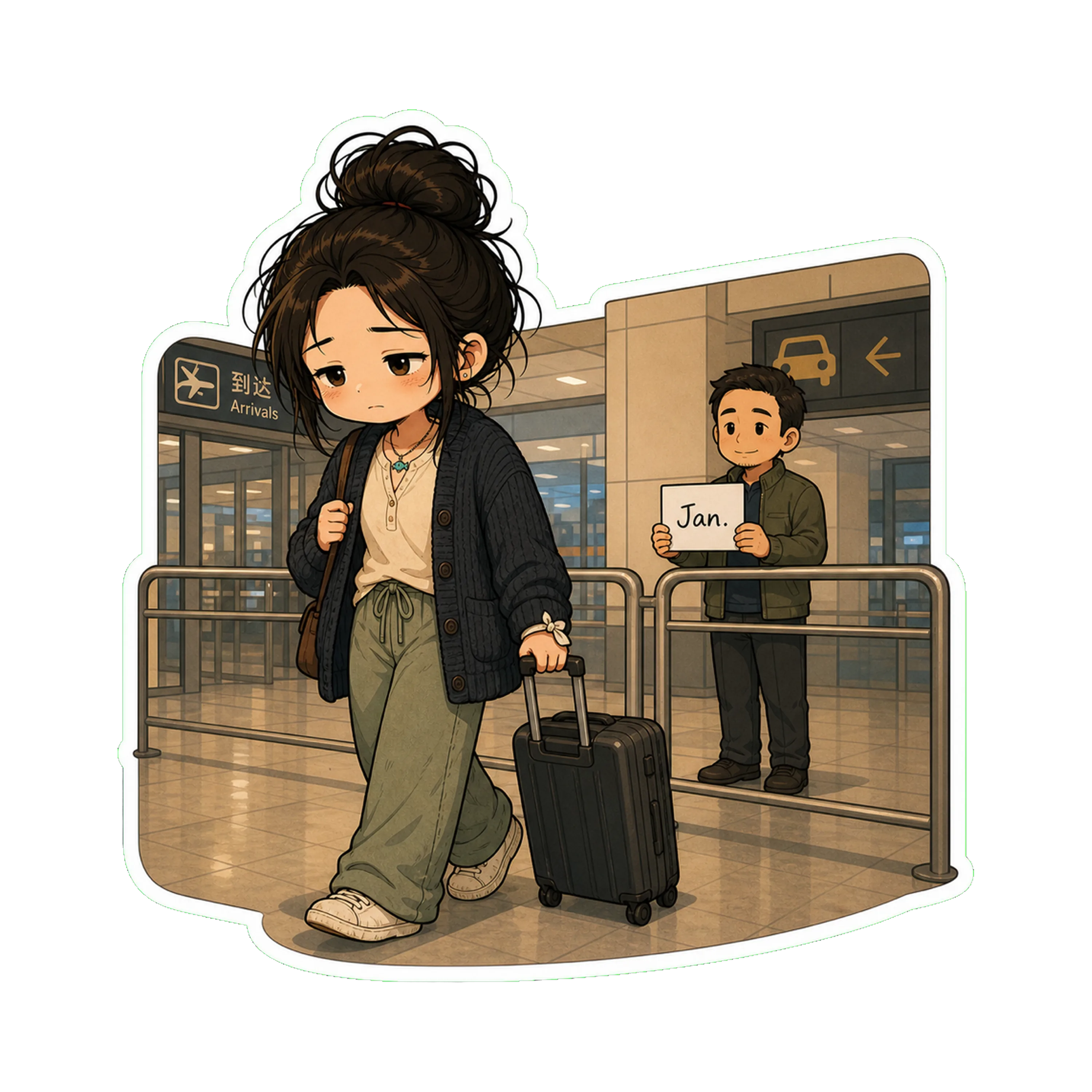
PVG arrivals gate, evening
#01

The Arrival

PVG at 7:42 PM.

Mom wasn't at the railing. She'd arranged a driver — a man in his fifties, kind eyes, who took the suitcase without being asked. He didn't speak. He knew. Didn't look out the window. Looked at my own lap. Knocked once. Went in. Mom was in the small entryway, in her white-mourning clothes, in her socks, in the soft yellow light. She didn't say anything. She held my face. She held it for a long second. She let go. She said: eat the orange. She handed me an orange.
The middle chair
#02

The Chair, Empty

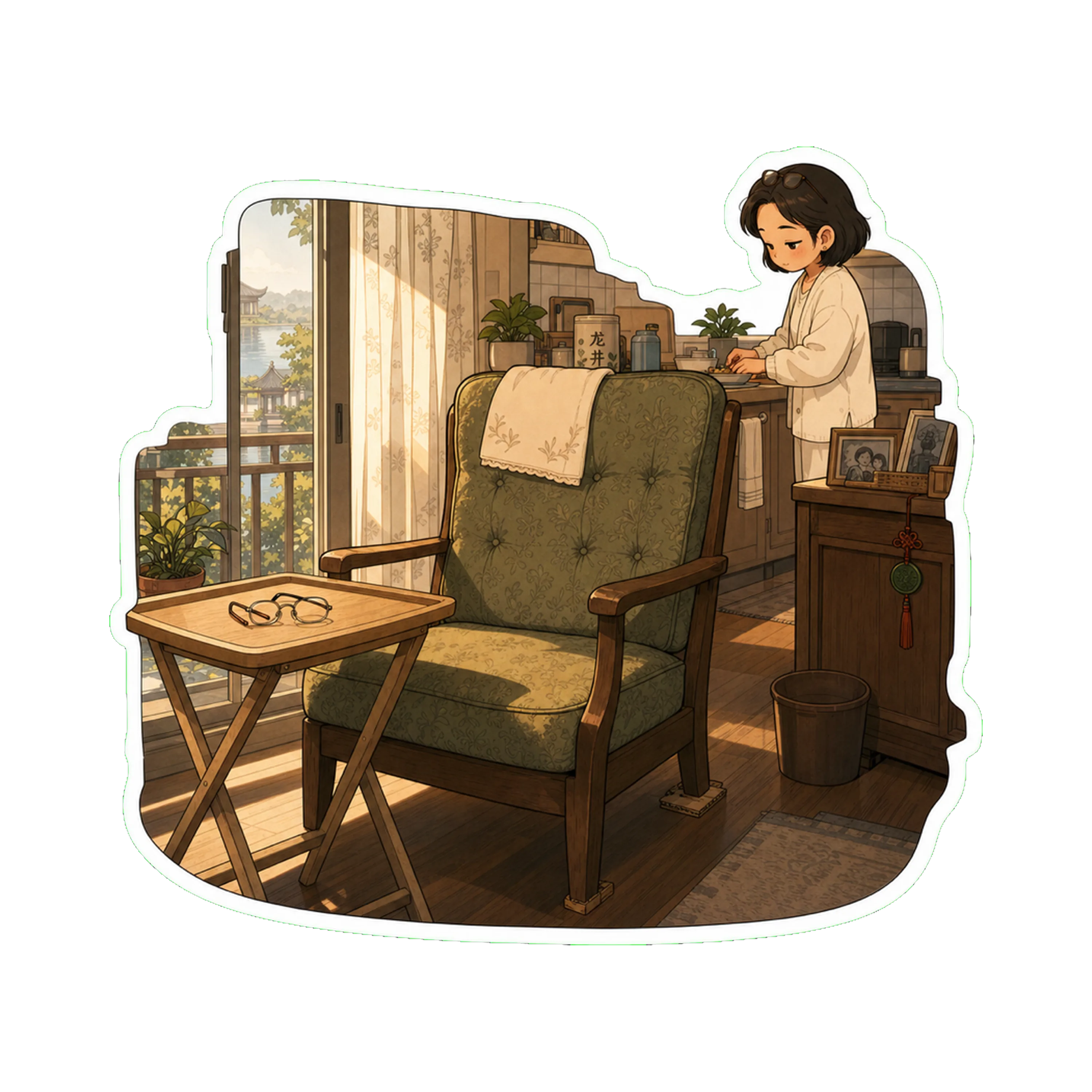
The chair was empty.

The TV-tray had a cloth over its surface where the teacup had been. The grandfather's steel-rimmed glasses were on the tray. Mom had placed them there. When I asked, the morning after I arrived: I cannot, yet, decide where they should go. I keep moving them and putting them back. She'd moved them from the bedside table to the bathroom counter to the kitchen counter to the TV-tray. By day one, they had settled. They would stay there for the rest of Mom's time in this apartment. The chair had the same shape it held three weeks ago.


Mom's apartment, day two afternoon
#03

The Family, Arriving

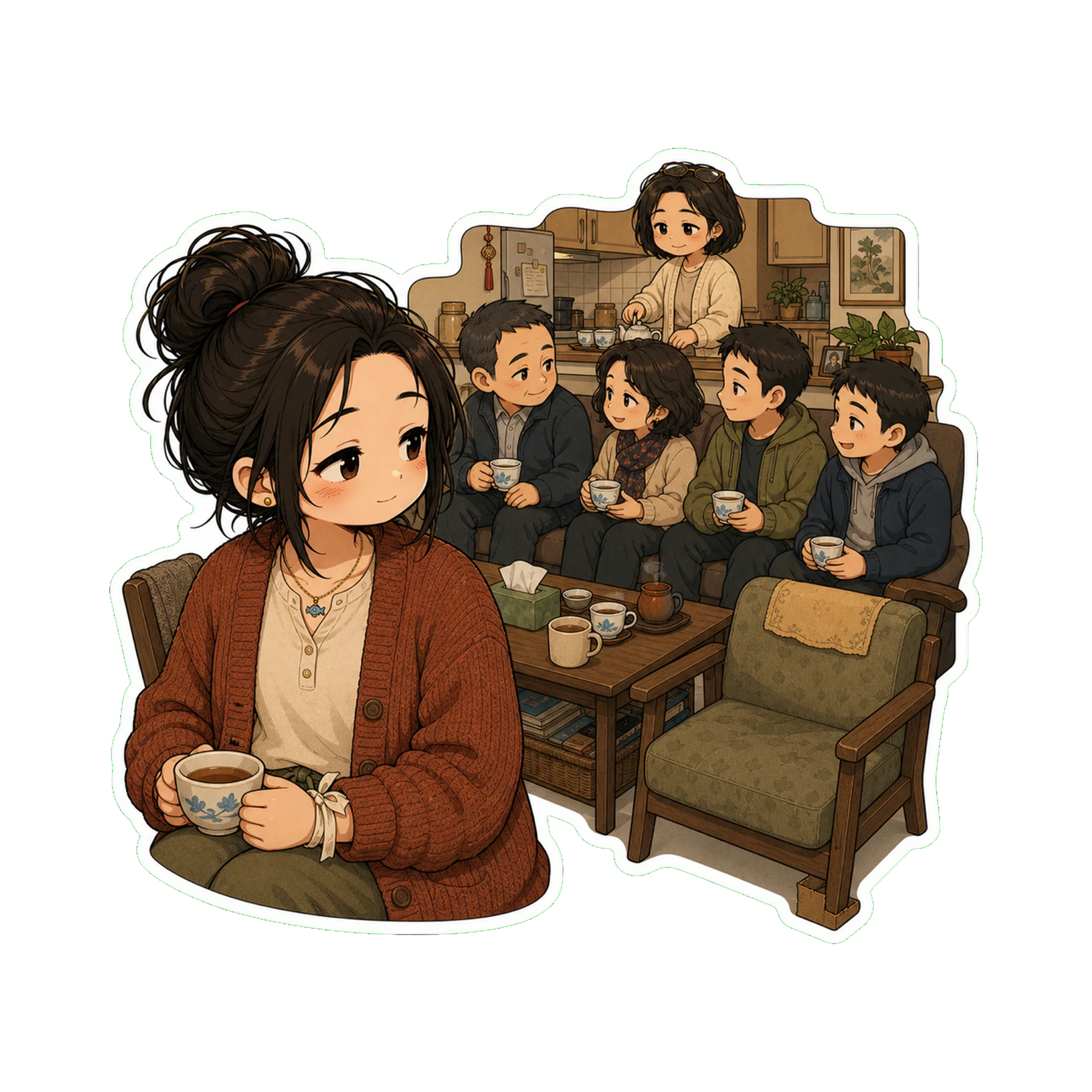
The family arrived on day two.

My uncle from Shanghai. His wife. Two adult sons — cousins I hadn't seen since 2015. Five new people in the apartment. Mom had been hosting alone for eight days. She didn't put it down. The cousins were polite-warm with me the way distant relatives are. The uncle hugged me — he hugs, unlike my grandfather. He wept in the way a Chinese man in his sixties weeps for his father — in the kitchen, alone, briefly, before returning to the living room with tea for everyone. Mom and her brother didn't hug that day. They'd said it on the phone eight days ago.


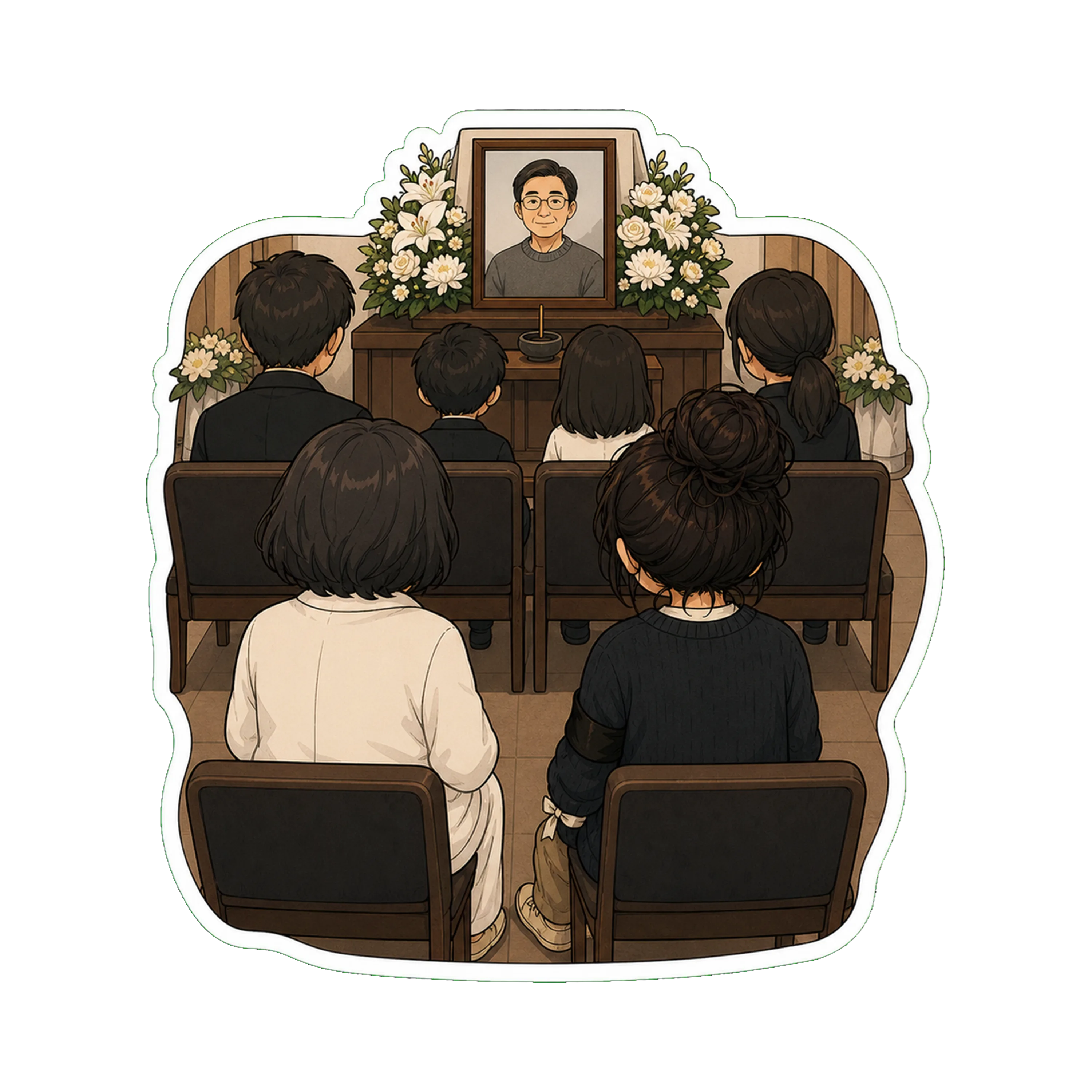
A small modest hall — the audience does not, in this rendering, see anyone's face directly
#04

The Service

The service was at ten AM on day three.

The hall was small. Thirty-two people. The grandfather hadn't, in his lifetime, asked for much; the service honored that. Mom's brother gave a reading. A former colleague spoke. Mom and I didn't speak — the family isn't given to public speech at funerals. The grandfather's photo was on the platform — him in the cream sweater, in his fifties, looking out at a park bench. Mom told me: a colleague had taken it in 1991 without asking. It had been on Mom's desk for thirty-eight years. The service lasted forty-eight minutes. The service was the service.


Day three late evening
#05

The Tea, in Silence

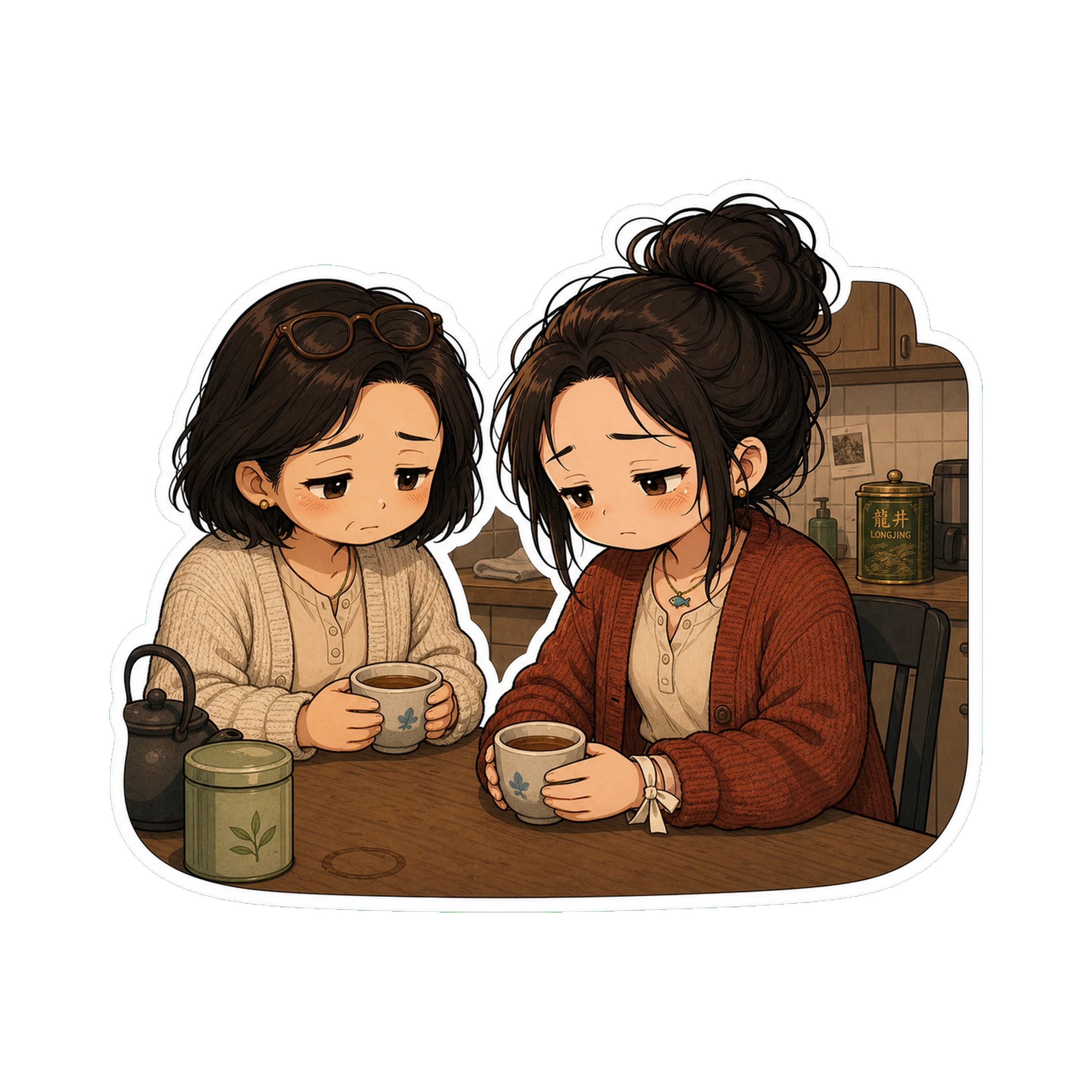
Tea at the kitchen table at 10:14 PM.

The service had ended eleven hours ago. We'd done the dishes, the calls, the notes from neighbors. The kitchen was finally quiet. Neither of us had talked about the service. Mom and I sat. I reached for a tea tin, fumbled it, dropped it. Loose leaves scattered across the linoleum. We stared at them. I got down on my knees and started crying over the spilled leaves, because it was easier than crying over the empty chair. Mom got down next to me and helped me sweep without saying a word. After a long silence: we will use his tea tomorrow. I said okay.


Day four mid-afternoon
#06

The Balcony, Empty

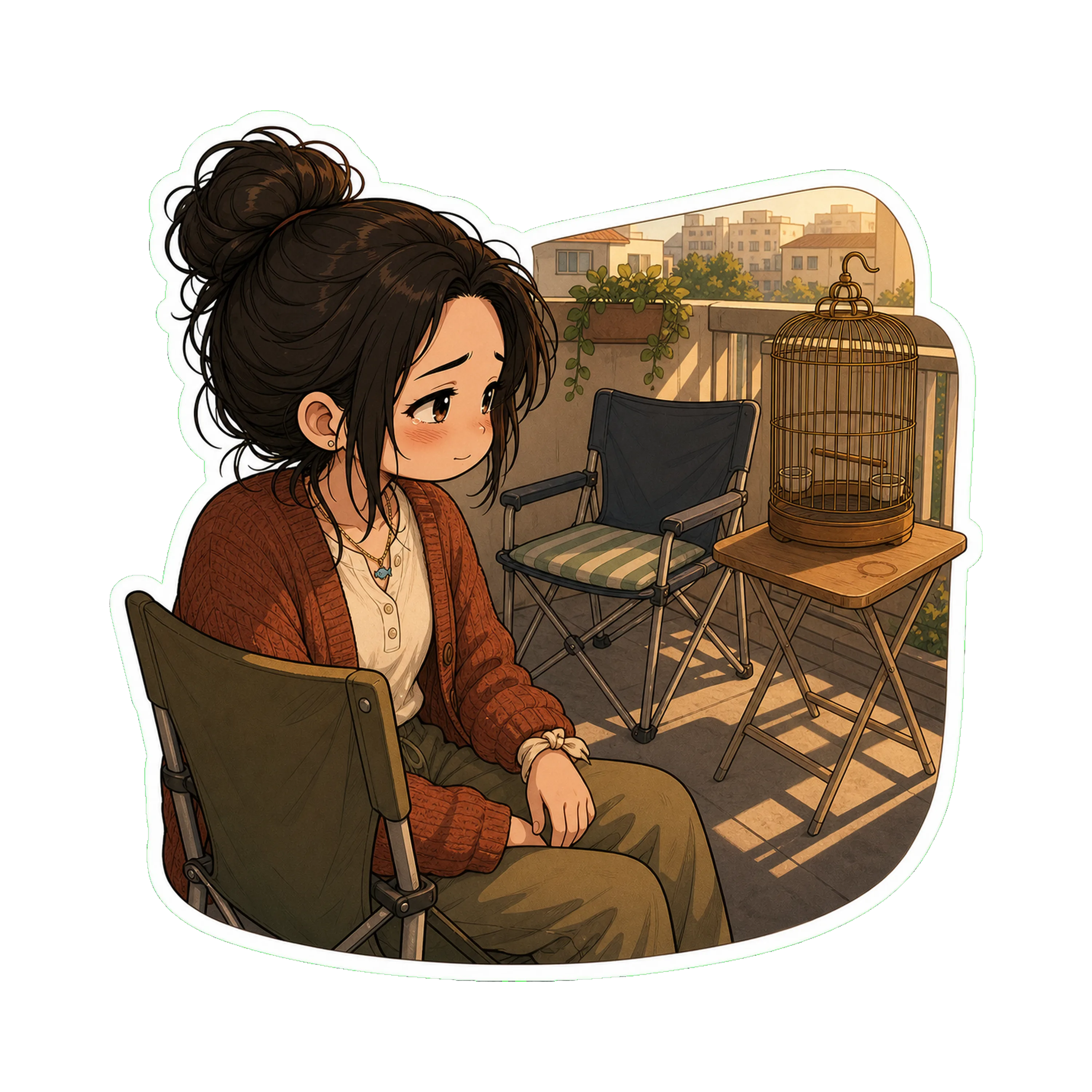
Went out to the balcony on day four.

Sat in my chair. His chair was beside me, empty. The bird cage on the wall. The afternoon sun the same warm sun as three weeks ago. I wanted to sit there and be stoic. Instead, I sneezed, startled a pigeon, and felt a sudden irrational flash of anger that the sun was still shining the same way it had three weeks ago. I kicked the leg of the empty chair. Hard enough to hurt my toe. The crying didn't come. The anger did. "They are smaller than they used to be," he'd said, on day five of the prior trip, of the kids at the school across the street. The street was quiet. The chair was empty.


Day five morning
#07

The Old Tea, Day Five

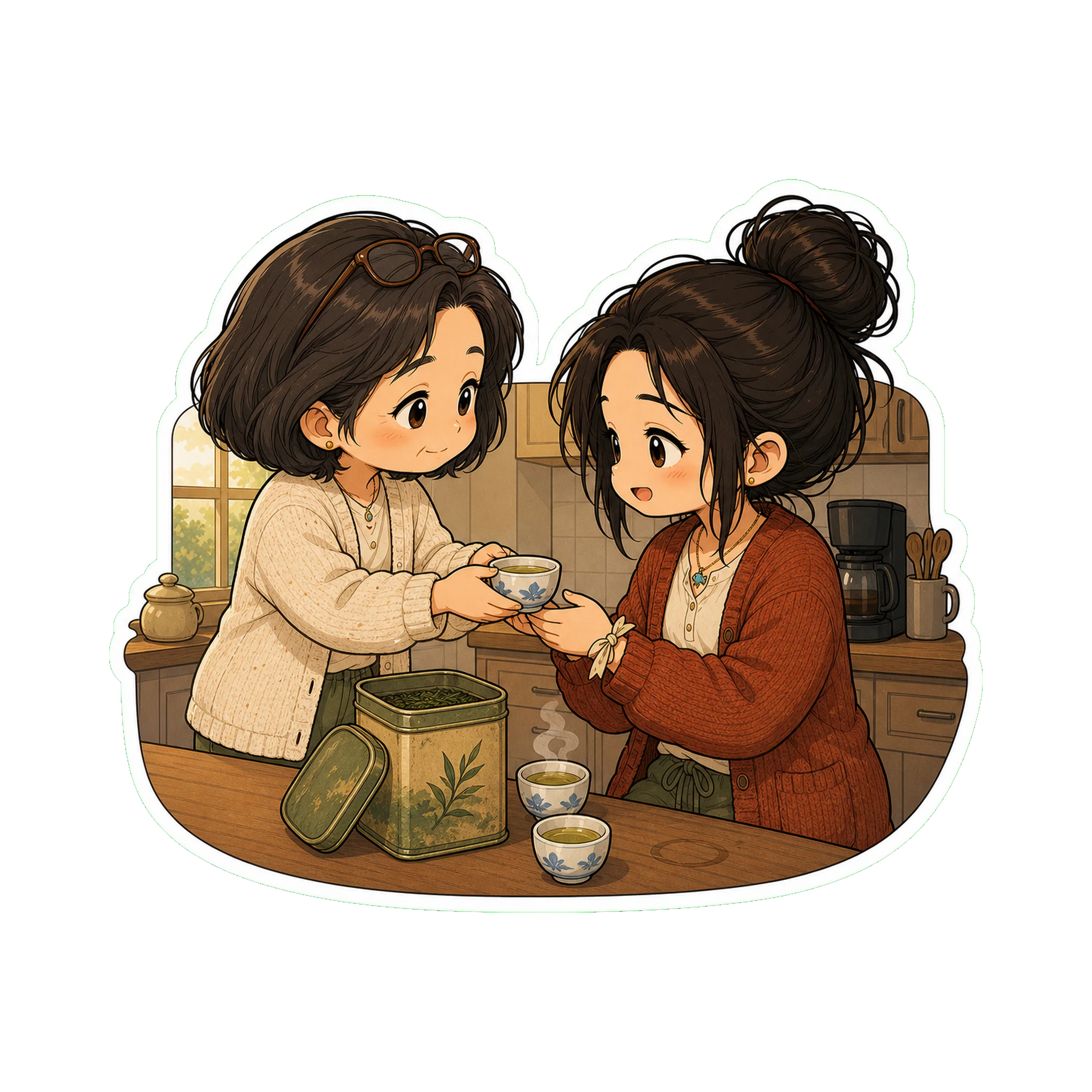
Mom made the tea from his tin on day five morning.

The tin had been on the counter, untouched, for eleven days. She made it the way he made it — the small clay teapot, the first pour discarded, the second into the cups. We drank standing at the counter, the way he'd drunk. Mom said, after a long sip: 他做的对. He did it right. I said yes. Mom said, softer: I have not, in twenty years, made this tea myself. He always made it. I said I'll learn it from you. Mom didn't respond. She put the tin back, closed, on the counter where it had been.


Day seven, the airport
#08

The Flight Back

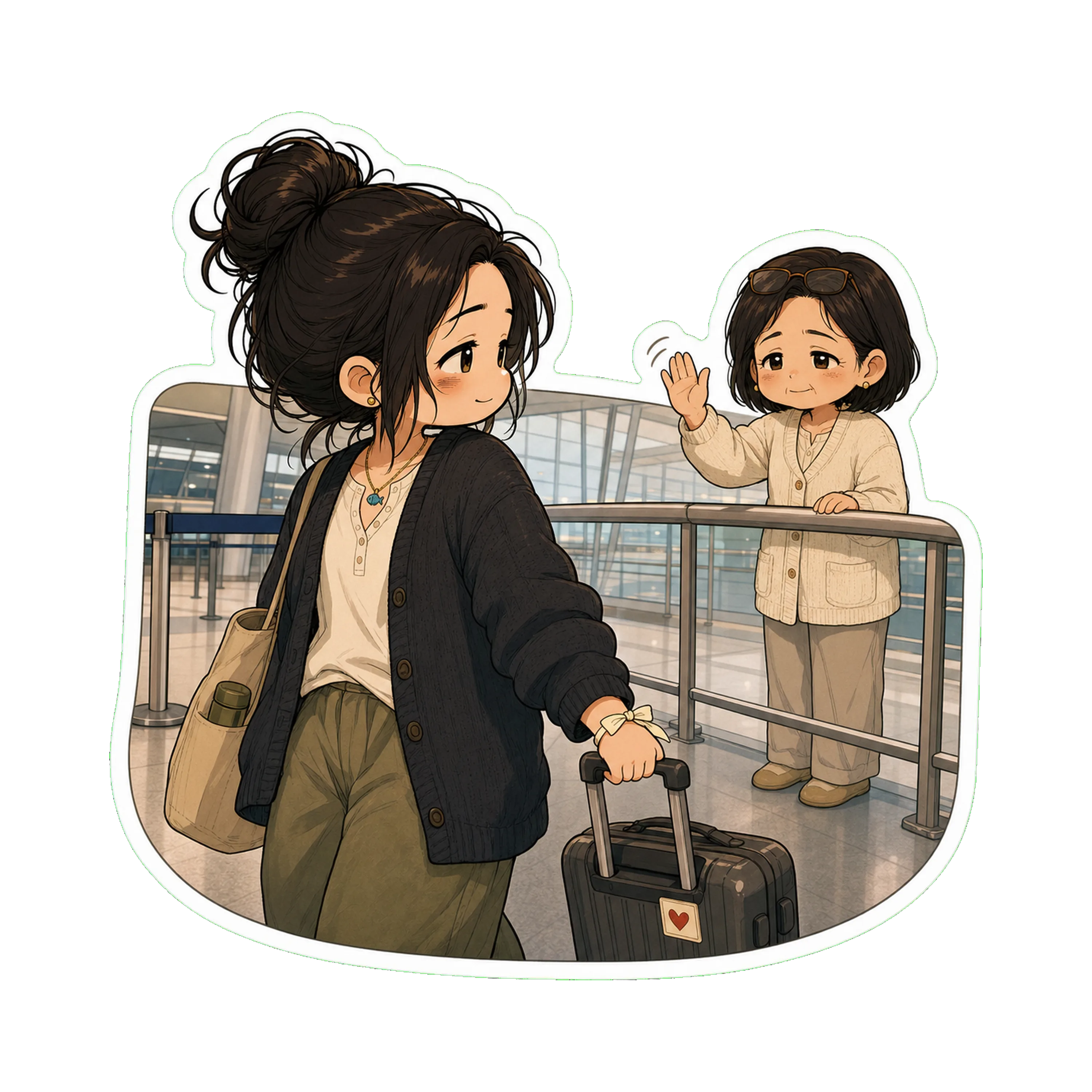
The flight back was on day seven.

Mom had asked, on day three, can you stay seven? and I'd said yes. The two extra days were quiet: one in the apartment, one at the park where the grandfather had walked every Wednesday in his last good year. Mom was at the railing. She said don't stay around. I said I'm going. She patted the air, twice — the two-pat. Hadn't registered, until that moment, that no apartment in this city held him anymore. Went through security. Looked back once. Went to the gate.


Brooklyn, the apartment, the evening of day eight (Jan back home from the funeral)
#09

The Chair, Brooklyn

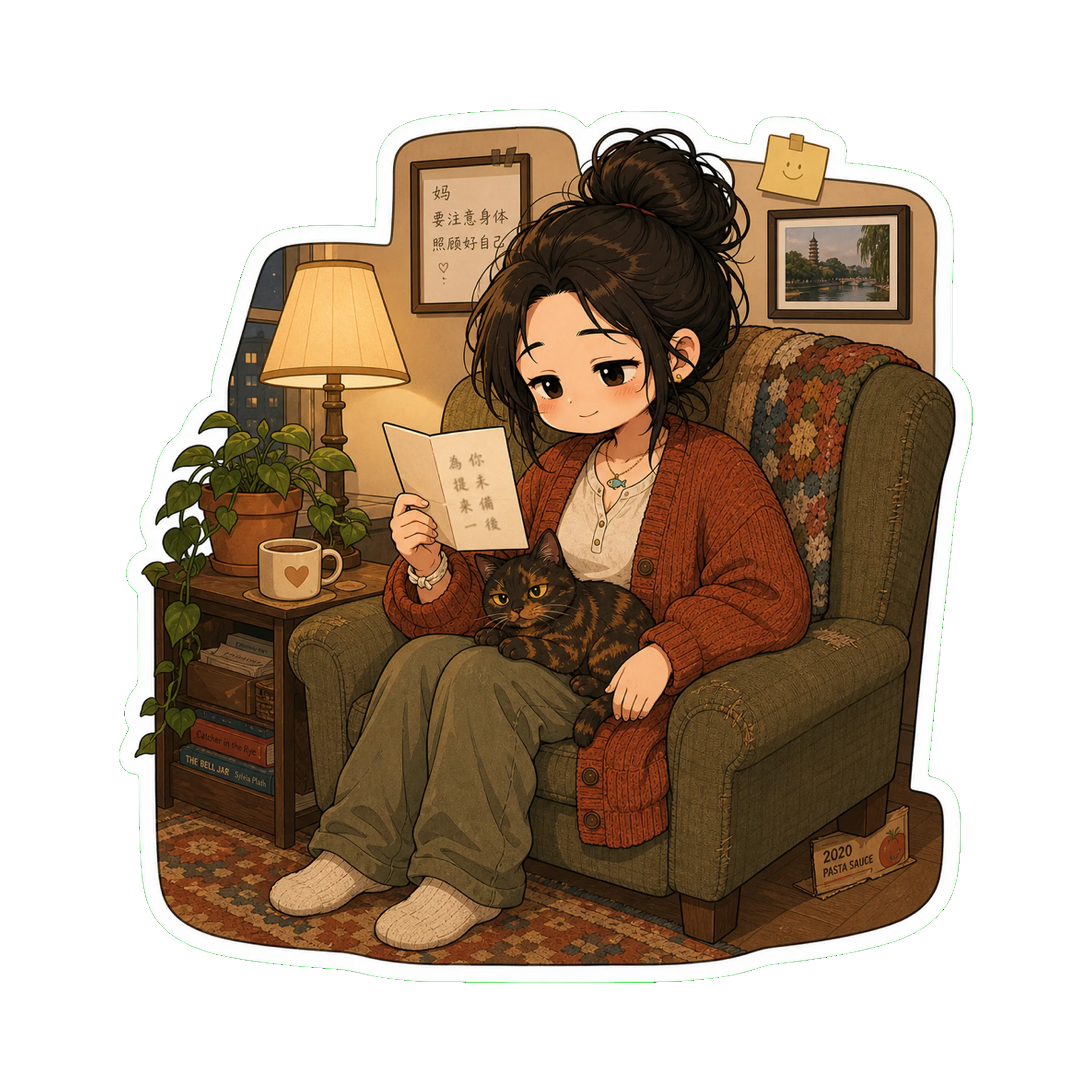
The apartment.

Put the rust cardigan on the moment I walked in. Mim refused my lap for ten minutes, then decided. The note was in my hand — the small folded piece of paper from day nine of the first trip. 我替你妈妈感谢你. I thank you on behalf of your mother. Left the coat in the bedroom when I'd packed for the funeral. Found the note still in the pocket tonight. He hadn't made me promise anything. He'd thanked me on behalf of my mother. The chair was, in Hangzhou, empty. The chair will be empty. The chair, in Brooklyn, has me in it. The note is here. The lamp is on.